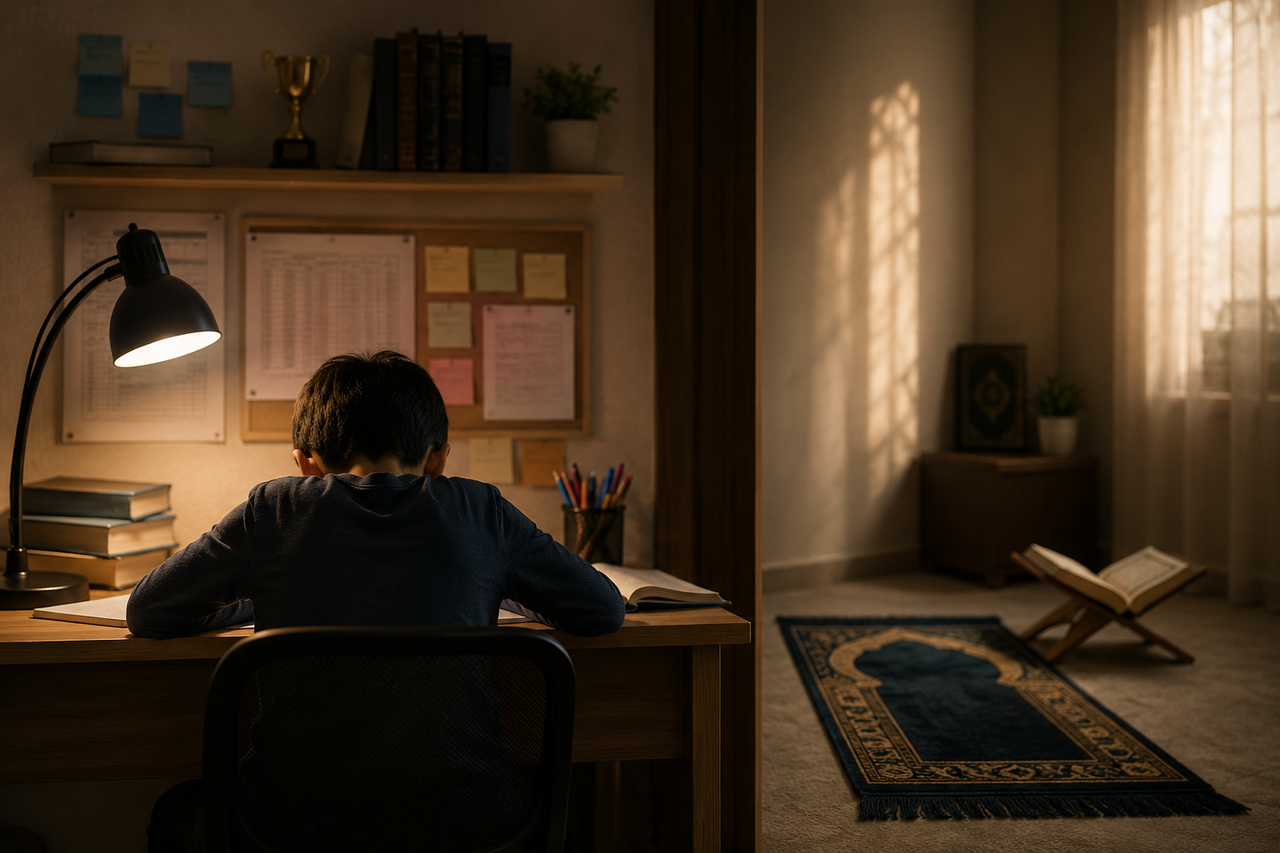
A child has homework, tuition, assignments, projects, exams, coaching classes, and skill development sessions.
Parents monitor marks carefully.
“If you don’t study, how will you succeed in life?”
“Finish your homework first.”
“Your exams are coming.”
“Focus on your future.”
And they are not wrong.
Parents naturally want stability, success, and opportunity for their children. They want them to have good careers, respected positions, and comfortable lives.
But sometimes, without realizing it, another message is also being taught alongside all of this:
Worldly success is urgent.
Deen can wait.
The Difference Children Quietly Notice
A child misses homework.
The parents react immediately.
A child performs poorly in exams.
Extra tuition gets arranged.
A child struggles academically.
Time, energy, money, and attention are invested.
But what happens when the child:
- does not pray regularly,
- cannot read Qur’an properly,
- barely knows basic duas,
- or slowly loses interest in Islam altogether?
In many homes, the reaction is far softer.
Sometimes it is ignored completely.
And children notice this difference far more than adults realize.
They begin understanding, silently and subconsciously, what truly matters most in the household.
What Are We Teaching Without Saying It?
Children learn priorities less from lectures and more from observation.
If school attendance is treated as non-negotiable, but Salah is optional, children absorb that.
If missing tuition creates panic, but missing Fajr creates no concern, children absorb that too.
If academic achievement is constantly celebrated while Islamic growth receives little attention, the message becomes clear.
Even if nobody says it directly.
Deen Was Never Supposed to Be Secondary
For many Muslim families today, deen slowly becomes something reserved for:
- weekends,
- Ramadan,
- childhood,
- or “when they grow older.”
But Islam was never meant to exist only in spare moments.
The purpose of deen is not simply to prepare a child for earning a living.